
Acoustic Panels
Acoustic panels are one of those purchases where the results are immediately, dramatically noticeable. Before and after treating a room with acoustic panels, the difference isn't subtle — it's the difference between a space that sounds alive and one that sounds controlled, clear, and purpose-built. Whether you're setting up your first home studio, outfitting a conference suite, designing a restaurant, or just trying to make your home office feel less cave-like, acoustic panels are a worthwhile investment that pays off every single day you use the space.
Browse our full selection of acoustic panels below — from entry-level foam kits to professional fabric-wrapped systems and custom decorative solutions — and find the right fit for your room, your budget, and your sound.
![Ekkogo Acoustic Panels 12-Pack Soundproof Wall Panels 12"X10.4"X0.4" Sound Panels High Density Sound Dampening Panels - [Deep Black Hexagon]](https://m.media-amazon.com/images/I/415A4JX0flL..01_SL120_..jpg "Ekkogo Acoustic Panels 12-Pack Soundproof Wall Panels 12\"X10.4\"X0.4\" Sound Panels High Density Sound Dampening Panels - [Deep Black Hexagon]")
![Ekkogo Acoustic Panels 12-Pack Soundproof Wall Panels 12"x12"x0.4" Decorative Sound Dampening for Your Home, Office, Studio, Bedroom & More with Unique ModuArc Carving [Light Gray]](https://m.media-amazon.com/images/I/51+GAhcRI1L..01_SL120_..jpg "Ekkogo Acoustic Panels 12-Pack Soundproof Wall Panels 12\"x12\"x0.4\" Decorative Sound Dampening for Your Home, Office, Studio, Bedroom & More with Unique ModuArc Carving [Light Gray]")
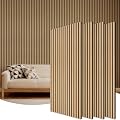
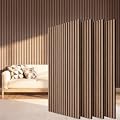
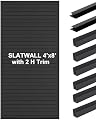
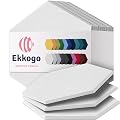
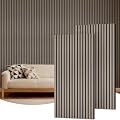
![Ekkogo Acoustic Panels 12-Pack Soundproof Wall 12"X12"X0.4" - High Density Sound Dampening [Gin Green Square]](https://m.media-amazon.com/images/I/51VkKSaqrSL..01_SL120_..jpg "Ekkogo Acoustic Panels 12-Pack Soundproof Wall 12\"X12\"X0.4\" - High Density Sound Dampening [Gin Green Square]")
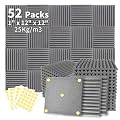
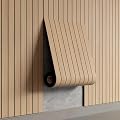
![Ekkogo Acoustic Panels 12-Pack Soundproof Wall Panels 12"X10.4"X0.4" Sound Panels High Density Sound Dampening Panels - [Light Turquoise Hexagon]](https://m.media-amazon.com/images/I/51fcGFHNliL..01_SL120_..jpg "Ekkogo Acoustic Panels 12-Pack Soundproof Wall Panels 12\"X10.4\"X0.4\" Sound Panels High Density Sound Dampening Panels - [Light Turquoise Hexagon]")
![Ekkogo Acoustic Panels 12-Pack Soundproof Wall Panels 14"X12.1"X0.4" Sound Panels High Density Sound Dampening Panels - [Smoky White Hexagon]](https://m.media-amazon.com/images/I/51vLZXZT5gL..01_SL120_..jpg "Ekkogo Acoustic Panels 12-Pack Soundproof Wall Panels 14\"X12.1\"X0.4\" Sound Panels High Density Sound Dampening Panels - [Smoky White Hexagon]")
![Ekkogo Acoustic Panels 12-Pack Soundproof Wall Panels 12"X12"X0.4" Sound Panels High Density Sound Dampening Panels - [White Square]](https://m.media-amazon.com/images/I/418teBZMUCL..01_SL120_..jpg "Ekkogo Acoustic Panels 12-Pack Soundproof Wall Panels 12\"X12\"X0.4\" Sound Panels High Density Sound Dampening Panels - [White Square]")
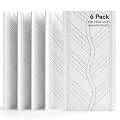
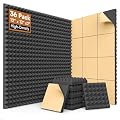
What Are Acoustic Panels?
Acoustic panels are sound-absorbing materials designed to reduce noise reflections, echoes, and reverberation within a room. Unlike soundproofing materials (which block sound from entering or leaving a space), acoustic panels work inside a room to improve the quality of sound within it. They absorb sound waves that would otherwise bounce off hard surfaces like walls, ceilings, floors, and windows.
Most acoustic panels consist of a dense, porous core — commonly fiberglass, mineral wool, or foam — wrapped in fabric or finished with a decorative surface. When sound waves hit the panel, the energy is converted into a tiny amount of heat rather than reflecting back into the room. The result is a quieter, clearer, more controlled acoustic environment.
Acoustic panels are used in a wide range of settings: recording studios, home theaters, podcast rooms, corporate offices, restaurants, schools, houses of worship, gyms, and standard living spaces where sound quality matters.
How Acoustic Panels Actually Work
To understand acoustic panels, it helps to understand what reverberation is. Reverberation is the persistence of sound after the original sound source has stopped. Clap your hands in an empty tiled bathroom and you'll hear it — that long, washy tail of sound bouncing off every hard surface. In a room with furniture, curtains, rugs, and soft materials, that reverberation is absorbed and the sound dies out quickly.
Acoustic panels replicate and amplify that natural absorption effect. They're rated by something called a Noise Reduction Coefficient (NRC), which is a number between 0 and 1. An NRC of 0 means the panel reflects all sound; an NRC of 1 means it absorbs all sound. Most quality panels fall between 0.65 and 0.95. Higher NRC ratings generally mean better absorption, especially in the mid and high frequency ranges.
Some panels also address low frequencies — the bass range that causes the booming, muddy quality in untreated rooms. These are called bass traps, and they're typically thicker and denser than standard panels. If you've ever heard music in a room where the bass felt overwhelming or undefined, you were experiencing an untreated low-frequency problem.
Types of Acoustic Panels
Not all acoustic panels are created equal, and choosing the right type depends heavily on your specific use case.
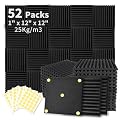
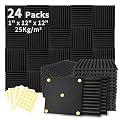
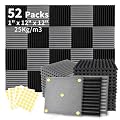
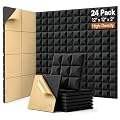
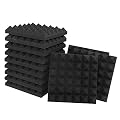
Foam Acoustic Panels are the most recognizable — the wedge- or pyramid-shaped tiles you've seen in recording booths and YouTube videos. They're lightweight, inexpensive, and easy to install with adhesive or mounting tape. They work well for mid and high frequencies, making them suitable for vocal recording, podcasting, and gaming setups. They're less effective at treating low-end frequencies.
Fabric-Wrapped Panels are a step up in both performance and aesthetics. These typically use a rigid fiberglass or mineral wool core wrapped in acoustically transparent fabric. They deliver higher NRC ratings and are available in a wide range of colors and sizes, making them popular for offices, home theaters, and spaces where appearance matters. Many are custom-fabricated to client specifications.
Diffuser Panels serve a different purpose than absorbers. Rather than soaking up sound, diffusers scatter it in multiple directions, creating a sense of spaciousness while still controlling harsh reflections. They're commonly used in recording studios and high-end home theaters alongside absorption panels to create a balanced, natural-sounding space.
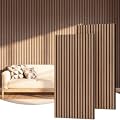
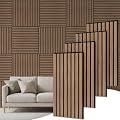
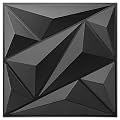
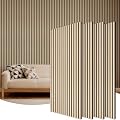
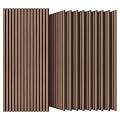
Decorative Acoustic Panels have become increasingly popular as acoustic treatment has moved into mainstream interior design. These panels are designed to look as good as they perform — available in geometric patterns, wood finishes, fabric prints, and custom artwork. You can find options that blend seamlessly into a modern living room or become a statement wall feature in a boutique hotel lobby.
Bass Traps are specialized low-frequency absorbers. They're usually corner-mounted since corners are where bass energy accumulates most strongly. Bass traps are nearly always recommended as part of a complete acoustic treatment plan for music studios and home theaters.
Choosing the Right Acoustic Panels for Your Space
For Home Recording Studios and Podcast Rooms
If you're recording vocals, instruments, podcasts, or any audio content, your goal is a dead room — minimal reflection, no flutter echo, tight and controlled sound. You'll want high-NRC panels on the wall behind you, on side walls at reflection points, and ideally a ceiling cloud above your recording position. Adding corner bass traps will round out the low end. Foam panels work in a pinch, but fabric-wrapped panels deliver noticeably better results at all frequency ranges.
For Home Theaters and Media Rooms
Home theaters benefit from a balance of absorption and diffusion. Too much absorption makes the room feel unnaturally quiet and fatiguing to listen in. The goal is controlled reverberation — enough to feel lively and cinematic, but without the echoey smear that muddies dialogue and music. Panels on side walls, rear walls, and the ceiling (especially at the first reflection points) make the biggest difference. Fabric-wrapped panels in dark colors are a popular choice here because they're unobtrusive.
For Open-Plan Offices and Conference Rooms
Open offices are notoriously difficult acoustic environments. Hard floors, glass partitions, and tall ceilings create a constant din that affects focus, productivity, and communication clarity. Acoustic panels in open offices are typically installed on walls, suspended from ceilings as baffles, or incorporated into furniture and partitions. For conference rooms, panels help ensure that speech is intelligible and that sound doesn't bleed into adjacent spaces during sensitive conversations.
For Restaurants, Bars, and Hospitality Spaces
Noise is one of the most common complaints diners have about restaurants, yet acoustic treatment is often an afterthought in commercial design. Decorative acoustic panels are a natural fit here — they can be integrated into the design as art pieces, ceiling installations, or wall features while doing the practical work of taming excessive reverb. A well-treated restaurant allows conversation to flow naturally without shouting across the table.
For Schools and Houses of Worship
Speech intelligibility is critical in classrooms, lecture halls, and churches. When reverberation time is too long, students miss what teachers say, congregations struggle to follow the service, and fatigue sets in fast. Acoustic panels reduce reverb time to appropriate levels for speech, making learning and participation more effective for everyone in the room.
How Many Acoustic Panels Do You Need?
This is one of the most common questions, and the honest answer is: it depends on the room, the surfaces, and your goals. A rough starting point for most rooms used for recording or listening is 25–35% wall coverage. Larger rooms with lots of hard surfaces need more; smaller rooms with existing soft furnishings may need less.
A useful approach is to prioritize reflection points first. These are the spots on your walls where sound from your speakers (or mouth) hits before reaching your ears — you can find them by having someone move a mirror along the wall while you sit in your listening position; wherever you can see the speaker or sound source reflected, that's a reflection point. Treating these spots delivers the most noticeable improvement per panel.
For professional applications, acoustic consultants can calculate the precise panel coverage needed based on the room's dimensions, surfaces, and target reverberation time. For most home and small commercial applications, a combination of good placement and sufficient coverage gets you 90% of the way there.
Installation Tips That Make a Real Difference
Installation is straightforward, but a few habits separate a great result from a mediocre one.
Mount panels at ear level when possible. The lower portion of your walls are where mid-range reflections cause the most trouble for speech and music. Panels above 7 feet are still useful for diffuse field treatment, but if you can only treat one zone, treat ear level first.
Don't cluster all panels on one wall. Sound comes from every direction and reflects off every surface. Spread panels around the room to address the full acoustic picture.
Use proper mounting hardware rated for the panel weight. Foam panels can get away with adhesive strips, but heavier fiberglass panels need wall anchors or a French cleat system, especially if they'll be in a commercial space with liability concerns.
Leave a small air gap between the panel and the wall if you can — even an inch or two of space behind the panel improves low-frequency absorption.
Treat the ceiling if possible. The ceiling is a major reflection surface and one that's often ignored. Ceiling clouds — horizontal panels suspended above your primary listening or recording position — deliver outsized acoustic improvement relative to their size.
Acoustic Panels and Interior Design: They Can Look Great
Gone are the days when acoustic treatment meant ugly foam tiles and institutional gray fabric. Today's acoustic panel market offers genuine design flexibility. Fabric-wrapped panels come in hundreds of color options, including custom fabric matches for branding and interior design projects. Printed acoustic panels let you apply any image or artwork directly to the panel surface. Geometric wood diffusers double as sculptural wall art. Felt panels cut into tiles, shapes, and patterns bring color and texture while doing acoustic work quietly in the background.
Interior designers and architects increasingly incorporate acoustic treatment from the planning stage rather than retrofitting after complaints come in. The result is spaces that look cohesive and professional while actually functioning well acoustically.
What to Look for When Buying Acoustic Panels in the USA
When shopping for acoustic panels in the American market, a few specifications and certifications matter.
NRC rating is your primary performance metric — look for panels rated 0.80 or higher for most applications. Fire ratings matter for commercial installations; look for Class A (Class 1) fire rating per ASTM E84 for office, hospitality, and public building applications. Panel thickness affects low-frequency performance — 2-inch panels are standard for most uses; 4-inch panels or dedicated bass traps are needed if low-end control is a priority.
Check whether panels ship with mounting hardware included, and read reviews specifically about packaging and damage during shipping — acoustic panels are bulky and can arrive damaged if the manufacturer doesn't pack carefully.
For large commercial projects, work with vendors who offer design assistance, sample programs, and lead time transparency. Custom-fabricated panels often require 3–6 weeks of production time, and factoring that into a project schedule early avoids expensive delays.