
Window Insulation Kits: Do They Really Cut Winter Heating Costs?
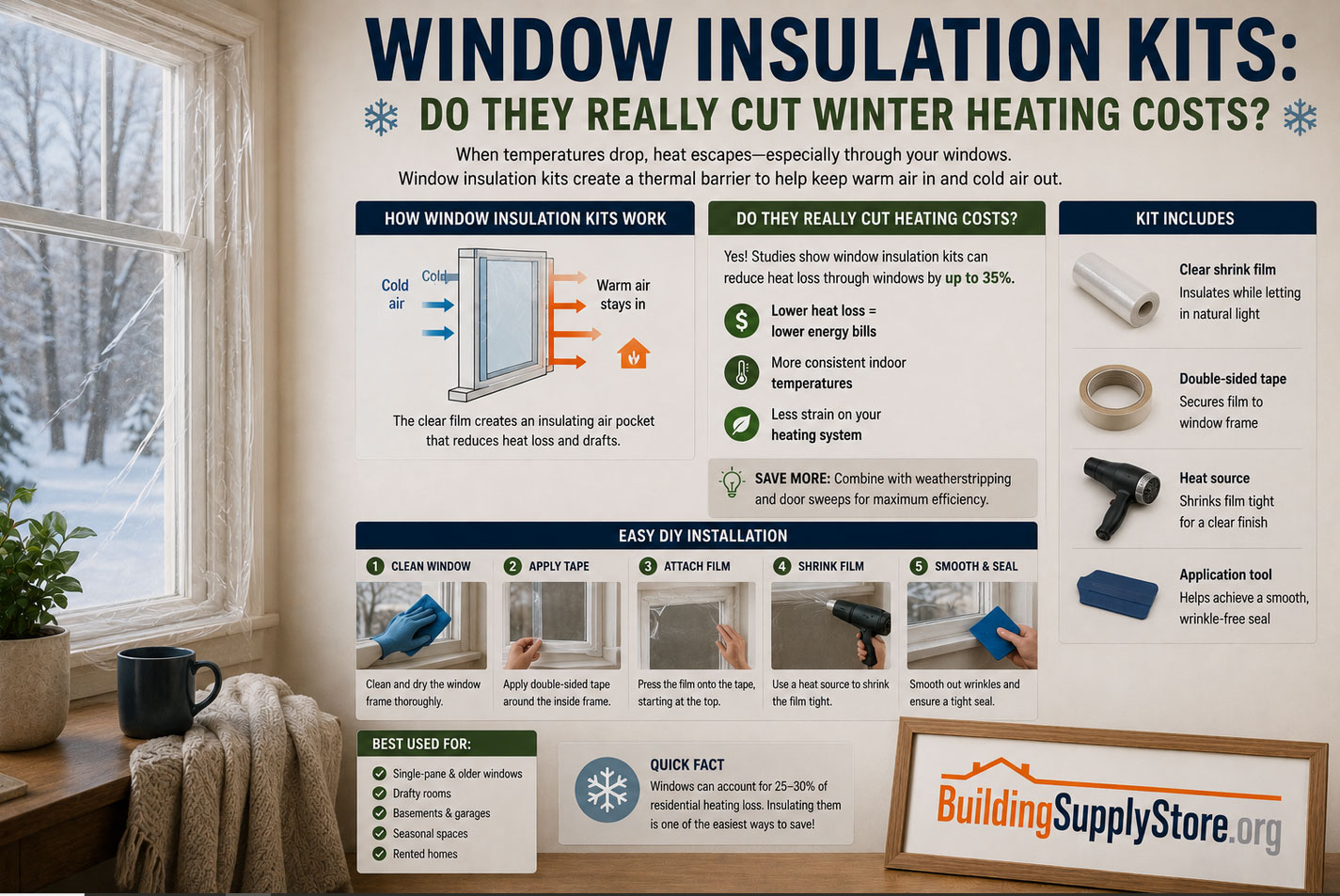
Every October, hardware stores roll out the same cardboard display near the front door: a stack of flat, shrink-wrapped boxes promising to "seal out the cold" for less than the price of a pizza. Inside is a folded sheet of plastic film, a roll of double-sided tape, and a set of instructions that involve a hair dryer. For generations of renters and budget-minded homeowners, this has been the go-to answer to drafty, single-pane windows.
But does taping plastic wrap over your glass actually move the needle on your heating bill, or is it a placebo you apply with a squeegee? The honest answer sits somewhere between the glowing package copy and the skeptics who dismiss the whole category as a scam. Below, we dig into the physics, the independent testing, the real installation mistakes that sink results, and the math you need to decide whether a $15 kit is worth your Saturday afternoon.
It's worth saying up front that this isn't a niche question. Heating costs climb every winter, home energy audits keep flagging the same weak points, and search interest in "window insulation kit" spikes reliably the moment the first hard frost hits. That timing isn't an accident — it's usually the point where someone standing in front of a cold windowpane, coffee in hand, starts wondering whether the box on the end-cap display is a genuine fix or just a well-marketed roll of plastic.
Why Windows Take the Blame First
Before judging the fix, it helps to understand the problem. Windows are, by design, the weakest thermal link in most home envelopes. Glass conducts heat far more readily than an insulated wall, and the frames, sashes, and tracks around older windows are full of tiny gaps that let air slip through.
The U.S. Energy Information Administration has estimated that leaky windows and doors combined can account for roughly a third of a home's heat loss, while other federal and industry estimates put heat gain and loss through windows specifically at around 25 to 30 percent of a home's total heating and cooling energy use. A widely cited fact sheet from Cornell University's Cooperative Extension puts it in stark terms: a single-pane window loses about 20 times as much heat as an equivalent area of insulated wall, and even a standard double-glazed window loses roughly 10 times as much.
That gap is exactly why window insulation kits exist in the first place. If a wall barely leaks heat and a window leaks like a sieve, the cheapest theoretical fix is to make the window behave a little more like the wall — even temporarily, even imperfectly.
What's Actually Inside the Box
A typical window insulation kit contains three things: a folded or rolled sheet of clear plastic film (usually polyethylene or PVC, somewhere around 0.75 mm thick), a roll of double-sided mounting tape, and instructions telling you to apply the tape around the window frame, press the film onto it, trim the excess, and then run a hair dryer over the surface until the wrinkles disappear and the film pulls drum-tight.
Brand names you'll recognize on the shelf include 3M's Indoor Window Insulator Kits, which use their Scotch-branded mounting tape and typically run somewhere in the $10 to $20 range depending on how many windows the box covers, and Duck Brand's window insulation kits, sold both as pre-cut boxed kits and as bulk rolled film for people insulating a lot of glass at once. Frost King is the other name you'll see constantly at hardware chains, marketing its kits as reducing heat loss through the treated window by up to 35 percent.
Prices scale with coverage. A basic kit for two or three average windows runs under $15. Larger multi-window packs, patio door sizes, or bulk rolls for old farmhouses with a dozen windows can run $30 to $60. Compared to the thousands of dollars a full window replacement costs, it's a rounding error — which is exactly the pitch.
The Actual Science Behind the Shrink-Wrap
The theory isn't nonsense. When you stretch plastic film a half-inch or so away from the glass and seal the edges airtight, you create a small pocket of trapped, still air between the film and the window. Still air is a genuinely decent insulator — it's the same principle behind double-pane and triple-pane glass, which use sealed air or gas-filled gaps to slow conductive heat transfer.
The catch is thickness and quality of seal. A single layer of quality polyethylene greenhouse film has an R-value (a measure of resistance to heat flow) of roughly 0.85. The film in most consumer kits is considerably thinner than greenhouse-grade material, and a lot of the benefit actually comes not from the film's own insulating value but from that trapped air layer — which only works if the seal around the edges is genuinely airtight. A wrinkled corner, a strip of tape that's lost its grip, or a gap where the frame isn't flat undoes much of the benefit, because moving air defeats the whole "dead air pocket" concept.
The Marketing Number vs. the Real Number
Here's where the category gets contentious. Package copy and some retailer listings claim energy savings in the 20 to 35 percent range, and older claims from parts of the industry have floated numbers as high as 30 to 50 percent reduction in energy bills. Meanwhile, This Old House, through contributor Bob Vila, has been quoted saying a properly applied window film can keep up to 70 percent of the heat that would otherwise escape through that specific pane from leaking out.
Notice the difference between those two claims: one is about total household energy bills, the other is about heat loss through the treated window itself. That distinction matters enormously, and it's where a lot of the marketing gets slippery. If windows account for roughly a quarter to a third of your home's heat loss, and a kit meaningfully reduces the conductive and convective loss through the glass itself, the realistic dent in your total heating bill lands far below the headline percentage — usually into single digits or low double digits for most households, not the 30-to-50 range sometimes implied on packaging.
Energy analysts and home-performance companies have pushed back hard on the more aggressive claims. Sealed, a home electrification and weatherization company, argues that plastic film doesn't meaningfully move the needle on a whole-home energy bill and that the bigger wins come from air-sealing the entire building envelope and upgrading attic insulation, not wrapping individual panes. A similar takedown from home-electrification advisory site QuitCarbon points out that the raw film used in most kits has a thermal resistance far below what marketing implies, and that homeowners chasing a 30 to 50 percent bill reduction from plastic sheeting alone will likely be disappointed.
The fairer, less headline-driven conclusion sits in the middle: the kits do something, just not nearly as dramatic as the boldest packaging claims suggest, and the something they do is concentrated specifically at the windows they cover, not across your whole utility bill.
What Independent Testers Actually Found
Marketing claims and skeptic pushback are both, in their own way, theoretical. What happens when someone actually tapes plastic over a cold window and measures the result?
Bob Vila's product testing team put several kits through hands-on trials and found the top performer — the 3M kit — noticeably reduced the cold draft felt near the glass and held its seal without peeling throughout the test period, though the reviewer was candid that quantifying the exact temperature or dollar impact in a real house, with variable wind, sun exposure, and window condition, is genuinely difficult without lab equipment. In a separate roundup, the same publication tested a Duck Brand kit against a rambunctious 80-pound dog and cold-weather wrinkles, concluding it held up on the durability front even if getting a perfectly smooth finish took real effort with a hair dryer.
Consumer Reports has run its own comparative testing across several kits, evaluating durability, puncture resistance, and how easy each one was to install — a reminder that "does it work" and "is it pleasant to use" are two different questions, and a kit that tears during installation or peels off after two weeks delivers zero savings regardless of its theoretical R-value.
Anecdotal, real-world reports back up the "modest but real" verdict. One reviewer compiling user feedback on the Duck Brand kit for House Digest cited a homeowner who measured roughly a five-degree difference in room temperature after covering the windows on a 30-degree day — a genuinely useful improvement in comfort, even if it's not the transformative bill-slashing some packaging implies. HVAC professionals interviewed by Homes & Gardens generally landed in the same place: the kits do work to reduce drafts and modestly help energy bills, but nobody should expect them to compensate for a poorly insulated house on their own.
Who These Kits Actually Make Sense For
The value of a window insulation kit depends heavily on who's asking. Four groups get real, practical value out of them:
Renters. If you can't caulk, can't replace a window, and definitely can't touch the HVAC system, a removable plastic film is one of the few weatherization moves fully within your control. It comes off in spring without a trace, assuming you're gentle with the tape.
Owners of older homes with single-pane windows. The larger the existing heat loss, the larger the absolute (not just percentage) improvement from any fix. A drafty 1920s double-hung window has far more room to improve than a ten-year-old double-pane unit.
People bridging a gap before a bigger fix. If new windows are three years and one kitchen renovation away on your list, a $15 kit buys you comfort now without committing money you're saving for something else.
Anyone insulating a rarely used room. A guest bedroom, sunroom, or basement window that doesn't need to look pretty all winter is a low-stakes place to test the approach.
Where kits make less sense: newer, well-sealed double- or triple-pane windows with little room to improve, homes where the bigger heat-loss culprits are an uninsulated attic or leaky ductwork, and anyone expecting the kind of dramatic bill reduction implied by the most aggressive packaging claims.
How to Install One So It Actually Works
Because so much of the benefit depends on an unbroken seal, installation technique matters more than which brand you buy. A rushed job with wrinkled film and half-stuck tape can turn a legitimately useful product into an expensive way to make your window ugly.
- Clean the frame thoroughly. Dust, old caulk residue, and grime keep tape from bonding. A quick wipe with rubbing alcohol on the area where tape will go improves adhesion significantly.
- Measure generously. Cut film a few inches larger than the window opening on every side rather than trying to match it exactly — trimming excess afterward is easy, but running short mid-installation is not.
- Apply tape around the entire frame first, pressing firmly and avoiding gaps at the corners, which is where most seal failures start.
- Lay the film loosely onto the tape rather than pulling it drum-tight by hand. Fighting wrinkles by stretching the film before heating usually creates more creases, not fewer.
- Trim the excess with scissors or a utility knife once the film is anchored on all sides.
- Run a hair dryer a couple of inches from the surface in slow, even passes. The heat shrinks the film taut and pulls out most wrinkles — this step often takes longer than people expect, sometimes twenty to thirty minutes for a large window.
- Check the perimeter after a day or two. Cold snaps and temperature swings can loosen tape at the corners; a quick re-press extends the seal's life through the season.
The Mistakes That Quietly Ruin Results
Most disappointing outcomes trace back to a handful of avoidable errors rather than the film itself failing. Skipping the cleaning step is the most common one — tape applied over dust or old finish loses grip within weeks. Stretching the film too aggressively before heating creates stress points that tear later. Using kits on unsuitable surfaces, like bare drywall, plaster, or unfinished wood trim, is another frequent misstep; most kits are formulated for painted wood, vinyl, or aluminum frames and explicitly warn against porous or unfinished surfaces. Finally, leaving small tears or peeled corners unrepaired defeats the entire point — a hole in the seal lets the trapped air layer escape, and the film becomes little more than decoration.
How Kits Stack Up Against Other Fixes
Window film is one tool in a broader weatherization toolbox, not a replacement for the whole kit. Here's how it compares to the other common options homeowners consider each fall:
| Method | Typical Cost | Best For | Limitation |
|---|---|---|---|
| Window insulation film kit | $10–$60 | Renters, single-pane windows, temporary fix | Modest whole-home savings; must be reapplied each year |
| Weatherstripping | $10–$30 | Sealing gaps around movable sashes and doors | Doesn't address heat loss through the glass itself |
| Caulk (for fixed frames) | $5–$15 | Permanently sealing non-moving gaps | Only fixes air leaks, not conductive glass loss |
| Insulated cellular shades | $50–$300+ per window | Year-round light control plus insulation | Higher upfront cost; blocks the view when closed |
| Thermal curtains | $30–$100 per window | Rooms where you want warmth and style | Only effective when actually closed |
| Storm windows | $100–$400+ per window | Older homes not ready for full replacement | Bigger investment, semi-permanent installation |
| Full window replacement | $300–$1,200+ per window | Long-term efficiency and home value | Most expensive option by a wide margin |
The U.S. Department of Energy has estimated that insulated cellular shades alone can cut heat loss through a window by 40 percent or more when kept closed — a number worth comparing against the more modest, single-digit-to-low-double-digit dent a plastic film kit typically makes in a whole-home heating bill. The honest takeaway: film kits are a strong, cheap complement to caulking and weatherstripping, not a replacement for them.
Doing the Math on Your Own Heating Bill
Numbers land better with a concrete example than with abstract percentages. Say a household spends $150 a month on heating through a five-month winter, for a seasonal total of $750. If windows are responsible for roughly 25 to 30 percent of total heat loss, and a well-sealed kit meaningfully improves the performance of the treated windows specifically, a realistic, testing-supported outcome might shave somewhere in the range of 5 to 12 percent off the total heating bill — call it $35 to $90 for the season, against a kit cost of $15 to $40 depending on how many windows need covering.
That's not a dramatic windfall, but it is a positive return within the same season, often within the first cold month, especially in a drafty older home where the starting point for window performance is poor. In a newer, already well-sealed house, the math gets much less favorable, since there's simply less heat loss left to capture.
The Verdict
Window insulation kits are not a scam, and they're not a miracle. They're a cheap, low-commitment way to squeeze a genuine but modest improvement out of your worst-performing windows, particularly if those windows are old, single-pane, or otherwise drafty, and particularly if you're a renter without the option to do anything more permanent. The trapped-air-layer science is sound; the marketing percentages are inflated; and the real-world results, per independent testers, land somewhere in the "noticeably less draft, moderately lower bill" territory rather than the "cut your heating costs in half" territory some packaging implies.
Used as one piece of a broader weatherization plan — alongside caulk, weatherstripping, and attention to the attic — a $15 box of plastic film earns its place in the toolkit. Used as a standalone fix for a poorly insulated house, it will disappoint anyone expecting it to carry the whole burden.
Frequently Asked Questions
Do window insulation kits actually reduce heating costs? Yes, modestly. Independent testing and real-world reports point to a noticeable reduction in drafts and a measurable, if not dramatic, dip in heating costs — generally a single-digit to low-double-digit percentage of your total bill, concentrated at the windows you treat.
How long does a window insulation kit last? Most kits are designed for a single winter season and are meant to be removed before summer. Reusable, thicker vinyl versions exist and can survive multiple seasons if stored and reapplied carefully.
Can window insulation film damage my windows or void a warranty? Some window manufacturers note that adhesive products applied directly to certain frame finishes or warranty-covered glass coatings can void coverage, so it's worth checking your window's warranty terms before applying tape directly to the frame.
Are window insulation kits better than thermal curtains? They serve different purposes. Film kits work continuously and don't require you to remember to close anything, while thermal curtains only insulate when drawn shut but offer more design flexibility and no risk of frame damage.
What's the single best upgrade if a kit isn't enough? Air-sealing with caulk and weatherstripping around movable sashes typically delivers a better return before jumping to storm windows or full replacement, since a large share of window-related heat loss comes from air leaks rather than the glass itself.
Where to Learn More
- Department of Energy — federal guidance on home weatherization and energy efficiency
- ENERGY STAR — window efficiency ratings and buying guidance
- Consumer Reports — independent kit testing and ratings
- Bob Vila — hands-on product reviews and installation tips
- 3M — official window insulator kit product line
- Duck Brand — window film kits and rolled shrink film
- Sealed — a critical, whole-home-weatherization perspective